create your own site for free
Mobirise

Cihou Fort

Cihou Fort or Cihou Battery (Chinese: 旗後砲臺) is a historic fort in Cijin District, Kaohsiung, Taiwan, formerly guarding the northern entrance to Kaohsiung Harbor.

The first fortifications were built in 1720 when Taiwan was ruled by the Manchu-led Qing Empire of China. After the Japanese expedition in 1874, the Qing authorities constructed a modern fort, which in 1880 had new Armstrong's guns installed. It played no part in the Sino-French War; the fighting in Taiwan took place around Keelung and during blockade French ships did not approach the port.
Mobirise

He-cheng Battery

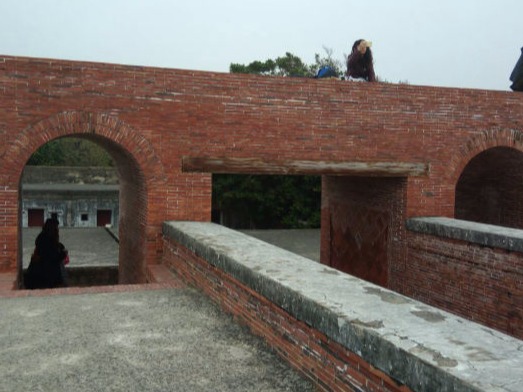
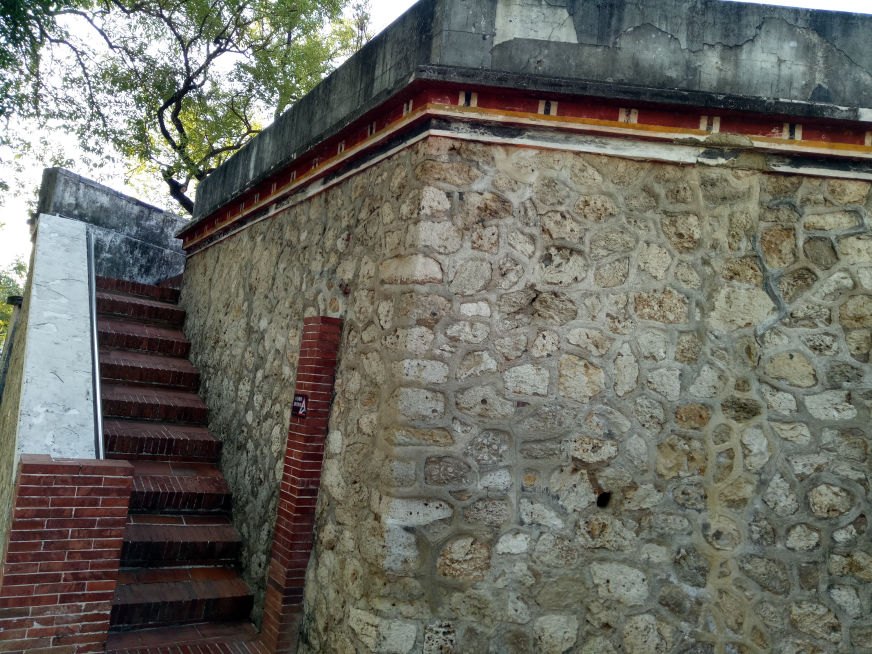
He-cheng Battery is situated behind the Cao Gong Temple, standing approximately 5 meters tall. The battery features a square design with an internal staircase leading directly to the top. Embedded in the front facade is a granite plaque inscribed with the characters "He-cheng," flanked by a note stating it was built by Cao Jin. The entire structure is exceptionally sturdy—as solid as a fortress.
A granite lintel is set into the front wall, bearing the title "He-cheng" and a credit to its founder, Cao Jin. The fortification is remarkably well-built, possessing immense defensive strength.
Mobirise

Chenglan Battery

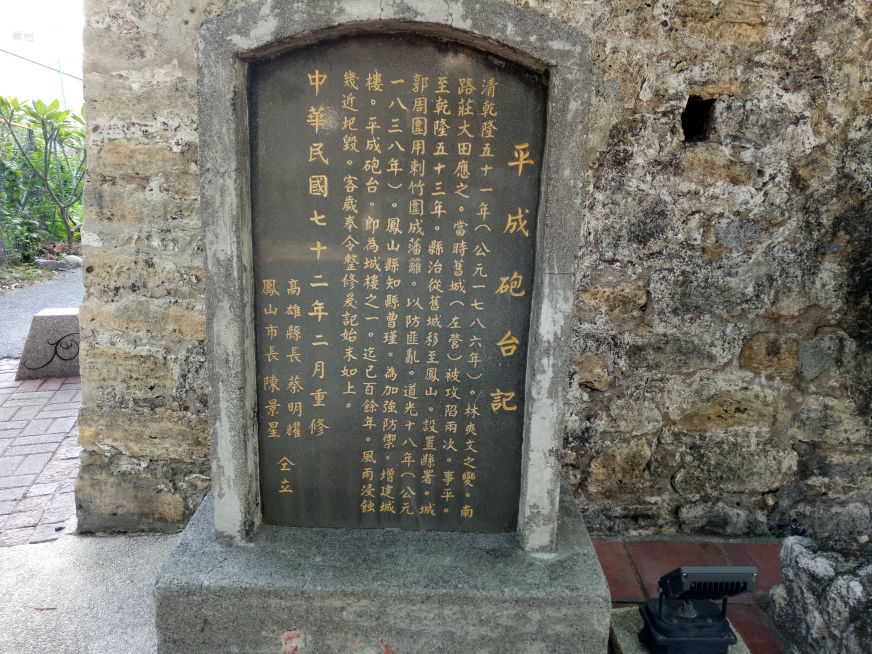
Following the Lin Shuang-wen Rebellion, the seat of Fengshan County was moved to Pitou Street (modern-day Fengshan District, Kaohsiung) in 1788 (the 53rd year of the Qianlong Emperor’s reign). To distinguish it from the "Old City" in Zuoying, it was named Fengshan County New City. Today, only a few remnants survive, including the East Convenience Gate (Dongbianmen) and the Hecheng, Xunfeng, and Chenglan Batteries. Additionally, the Dongfu Bridge outside the East Convenience Gate collapsed during Typhoon Trami in 2001; its two original stone piers have since been relocated to the riverbank for preservation.
Mobirise

Kaohsiung Lighthouse

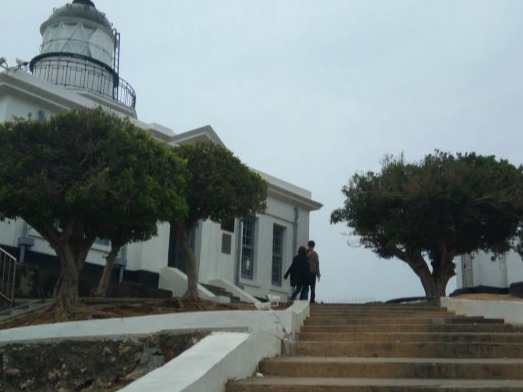
The Kaohsiung Lighthouse (traditional Chinese: 高雄燈塔Dengtǎ), is a lighthouse in Cijin District, Kaohsiung, Taiwan.
After the signing of Convention of Peking in 1860 during the Qing Dynasty rule, the Takau Harbor was opened to foreign traders in 1863. With increasing commercial shipping activities and a lack of a proper ship navigation system, the British engineers built a Chinese-style rectangular red-brick lighthouse at the top of Mount Ki-au, at the southern side of the harbor. In 1985, the lighthouse was designated a Historical Building and subsequently opened to the public.
Mobirise

Zuoying East Gate

East Gate, also known as "Feng Yi Gate", is a southeast view of the hills of Feng Shan, which resembles a flying phoenix, praying for the meaning of "having a phoenix to come". Located in Kaohsiung City East Gate Road In the past, East Gate Road was the main road leading to Bitou Street (now Fengshan District), and the walls of the East Gate remain relatively large, with walls on both sides of the gate remaining for hundreds of meters. It is rare to find an entrance to the pedestrian path, and the gate type structure at the entrance to the pedestrian path is still in place. The moat outside the city is still intact and is crossed by a bridge. Under the walls, there is a drainage facility called the "Water Gate", separated by three granite strips to prevent enemies from climbing into the city.

Mobirise

Zuoying West Gate

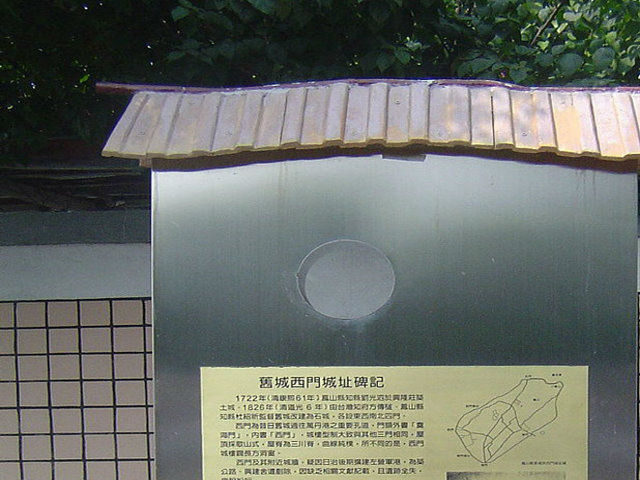
Ximen is also known as "Dianhai Gate," which means "stability," and since the city of Fengshan County borders the Taiwan Strait to the west, "Dianhai" means "stability of the sea. It was located in the present-day Zuoying Self-Help New Village. The city gate was completely destroyed and only about 100 meters of the city wall remained. Some locals have occupied the inner part of the house, and dense weeds even cover the top of the gate. Now, it is a forgotten history.


Mobirise

Zuoying South Gate

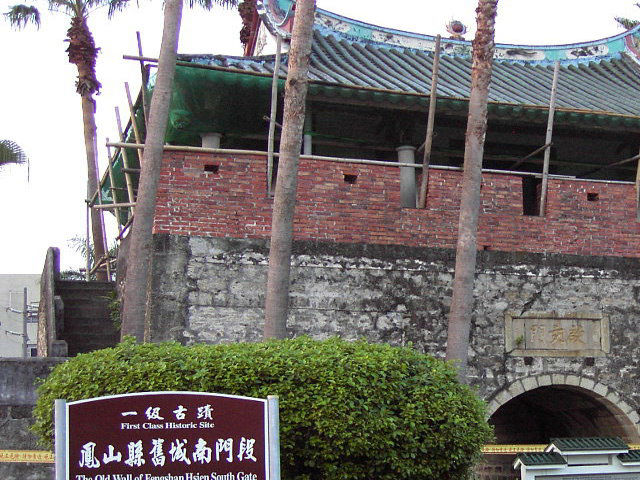
The south gate of the old city of Fengshan County is called Qiwen Gate, which is considered by the ancient people to be the main gate of literary fortune in the south, meaning "to open the path of the literati". It is located at the intersection of Zuoying Road and Gushan Road, a major traffic route in Zuoying, and the stone inscriptions are still intact. In August 1961, during the mayor's term of office, not only were the four corners of the gate rebuilt with concrete pillars, but also the South Gate Tower, which had disappeared during the Japanese rule, was reconstructed; however, the roof of the reconstructed tower was changed from the Qing Dynasty's "Sanchuan Ridge" style to the erroneous "Heshan Roof" style.

Mobirise

Zuoying North Gate

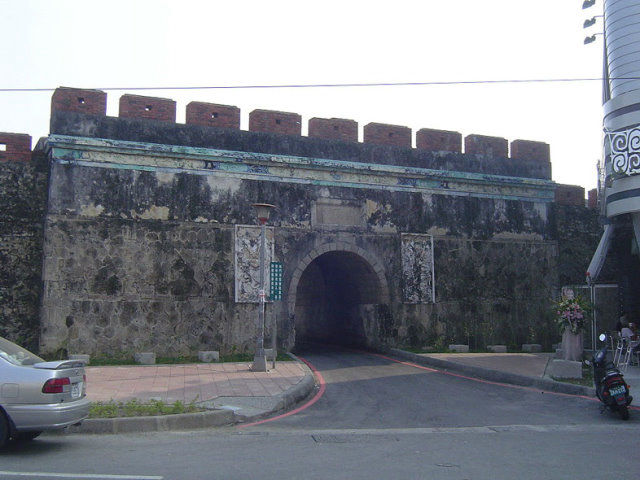
The North Gate is also known as "Gongchen Gate", the ancient name for the North Star, and "Gongchen" means "to govern with virtue, like the North Star living in its place, while all the stars are arching over it". People say that many gangsters frequented the northern part of Kaohsiung, so the residents painted scary images on the surface of the two castle gates at the northern gate to scare off robbers. These images are of two powerful gods with swords and hammers. In addition to the excellent painting style, the carving techniques on the gates are so exquisite that they are the most unique in Taiwan and no one else can compete with them. This is why it is now a Grade 1 historic site.